Lighting Submittals: How to Build Faster, Error-Free Submittal Packages

Building plans with a clip board and test talking about lighting submittals.

Lighting Submittals: How to Build Faster, Error-Free Submittal Packages

Most lighting sales agencies struggle with creating submittals in a timely manner—the challenge is doing it efficiently while maintaining accuracy. Lighting submittals have become one of the most critical yet time-consuming processes in the industry, especially as project timelines accelerate and expectations for precision continue to rise.

A lighting submittal involves compiling and presenting submittal packages that include all relevant fixture documentation for approval, such as cut sheets, specifications, photometric data, and compliance information. For many professionals, this raises the broader question: what is a submittal, and what are submittals in construction?

Submittals are required in nearly every construction project workflow and are used across applications like new construction, LED retrofit upgrades, and value engineering. They also apply across many lighting product categories, including troffer replacements, recessed LED fixtures, high-bay warehouse lighting, wall packs, and hazardous-location lighting.

Despite how essential this process is, most lighting professionals still rely on manual workflows—downloading cut sheets, organizing PDFs, formatting documents, and verifying specifications. Building a single submittal package can take anywhere from thirty minutes to several hours, often leading to inconsistencies, delays, or costly mistakes.

What Are Submittals in Construction?

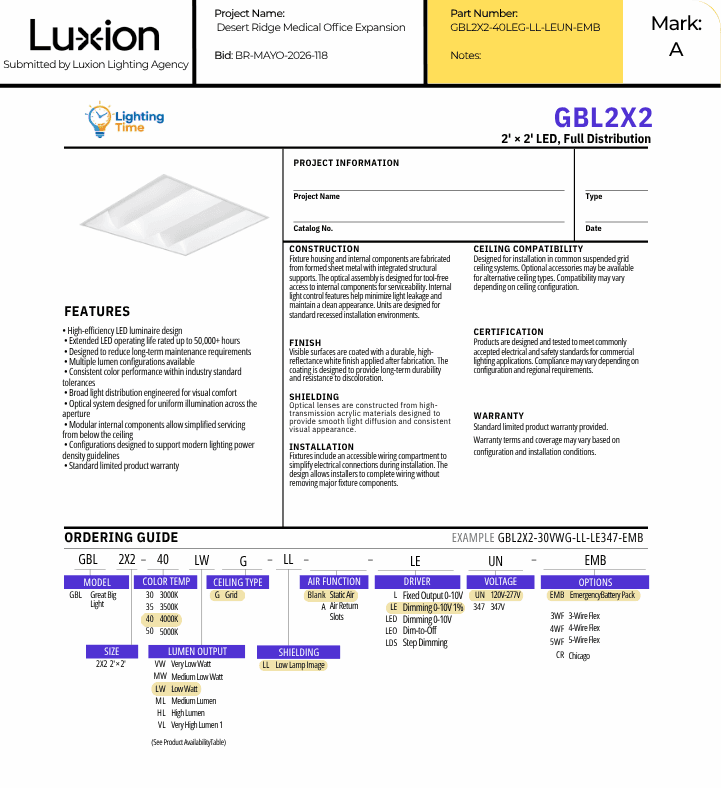
Construction submittals are documents submitted by contractors, suppliers, or manufacturers to architects, engineers, or project managers for approval before installation. These documents verify that selected products meet project specifications and compliance requirements.

A typical submittal package may include:

  • Product cut sheets

  • Fixture specifications

  • Photometric reports

  • Compliance documentation

  • Installation instructions

Submittals ensure that the products being installed match the design intent and performance requirements of the project.
Problems With the Traditional Construction Submittal Process

The traditional construction submittal process is highly manual and fragmented. It typically begins with sourcing product cut sheets from multiple manufacturers, often scattered across different websites, portals, or internal folders.

Once gathered, teams must compile these materials into structured submittal packages. Many rely on a submittal cover sheet example to ensure the documents are organized correctly before submission.

This process introduces several major challenges.

Time-Consuming Document Assembly

Assembling the submittals construction teams rely on for large projects—sometimes containing dozens or hundreds of fixtures—can take hours.

Inconsistent Formatting

Different team members often structure submittals differently, which creates confusion during the review process and slows approvals.

Errors and Missing Information

Manual workflows frequently lead to incorrect fixtures, missing documentation, or outdated data being included in packages.

Version Control Issues

As revisions occur, documents are often shared through long email threads or project platforms like Procore. Tracking the most current version quickly becomes difficult.

Why This Matters More Than Ever

As the lighting industry continues shifting toward LED upgrades, stricter energy codes, and faster construction timelines, the importance of efficient construction project submittals has increased dramatically.

Contractors, engineers, and project managers now expect faster turnaround times without sacrificing accuracy.

Submittals are no longer just a formality—they are essential to keeping projects on schedule.

Delays in the submittal process can slow procurement, push installation timelines back, and create friction between project stakeholders. In contrast, fast and accurate submittals can strengthen professional relationships, build trust, and increase the likelihood of winning repeat business.

How the Modern Construction Submittal Process Works

A modern approach to lighting submittals focuses on improving speed, accuracy, and consistency. Rather than relying entirely on manual workflows, forward-thinking teams are adopting submittal software construction tools designed to reduce repetitive tasks and improve document quality.

Centralized Product Data

Modern systems centralize fixture specifications, cut sheets, and documentation so that teams can quickly access the information needed for each project.

Automating Submittal Packages

Instead of manually assembling documents, automation tools can generate clean, professional submittal packages instantly.

Standardized Formatting

Standardization ensures every submittal follows a consistent format—similar to using a structured submittal cover sheet example—regardless of who generates the package.

Improved Collaboration

Modern tools make it easier for teams to share, review, and revise submittals in real time while maintaining version control.

For organizations exploring how to automate submittals, lighting submittal software is becoming an increasingly valuable solution for improving both speed and accuracy.

Where the Industry Is Headed

The lighting industry continues to evolve, and submittals are becoming a major area of focus for operational improvement.

As search demand increases for terms like submittals, submittals construction, and construction submittal process, it’s clear that more professionals are actively looking for better ways to manage this workflow.

Just as quoting and product-crossing tools are moving toward more efficient, technology-driven solutions, the submittal process is following a similar path.

Organizations that adopt modern workflows will gain a clear competitive advantage through faster turnaround times, higher accuracy, and more consistent deliverables.

Final Thought

Submittals should not be a bottleneck—they should be a strength.

If your team is still spending hours manually building submittal packages, there is a clear opportunity to improve efficiency, reduce errors, and move projects forward faster.

The future of lighting isn’t just about better fixtures.

It’s about better workflows.

And the submittal process represents one of the biggest opportunities for improvement.

Try Building Submittals in Seconds

The fastest lighting reps today aren’t manually assembling submittal packages—they’re automating the process.

If you want to see what automated lighting submittals look like in practice, you can try Luxion to:

• Generate clean submittal packages instantly
• Automatically compile fixture cut sheets and specifications
• Build consistent, approval-ready documentation in seconds

Start a 14-day free trial and experience how much faster lighting submittals can be when the process is automated.

Author

Gianni Fontanna

Director of Sales & Customer Relations, Luxion

Lighting industry professional focused on product crossing, quoting workflows, and lighting project execution.


Lighting Submittals: How to Build Faster, Error-Free Submittal Packages

Building plans with a clip board and test talking about lighting submittals.

Lighting Submittals: How to Build Faster, Error-Free Submittal Packages

Most lighting sales agencies struggle with creating submittals in a timely manner—the challenge is doing it efficiently while maintaining accuracy. Lighting submittals have become one of the most critical yet time-consuming processes in the industry, especially as project timelines accelerate and expectations for precision continue to rise.

A lighting submittal involves compiling and presenting submittal packages that include all relevant fixture documentation for approval, such as cut sheets, specifications, photometric data, and compliance information. For many professionals, this raises the broader question: what is a submittal, and what are submittals in construction?

Submittals are required in nearly every construction project workflow and are used across applications like new construction, LED retrofit upgrades, and value engineering. They also apply across many lighting product categories, including troffer replacements, recessed LED fixtures, high-bay warehouse lighting, wall packs, and hazardous-location lighting.

Despite how essential this process is, most lighting professionals still rely on manual workflows—downloading cut sheets, organizing PDFs, formatting documents, and verifying specifications. Building a single submittal package can take anywhere from thirty minutes to several hours, often leading to inconsistencies, delays, or costly mistakes.

What Are Submittals in Construction?

Construction submittals are documents submitted by contractors, suppliers, or manufacturers to architects, engineers, or project managers for approval before installation. These documents verify that selected products meet project specifications and compliance requirements.

A typical submittal package may include:

  • Product cut sheets

  • Fixture specifications

  • Photometric reports

  • Compliance documentation

  • Installation instructions

Submittals ensure that the products being installed match the design intent and performance requirements of the project.

Problems With the Traditional Construction Submittal Process

The traditional construction submittal process is highly manual and fragmented. It typically begins with sourcing product cut sheets from multiple manufacturers, often scattered across different websites, portals, or internal folders.

Once gathered, teams must compile these materials into structured submittal packages. Many rely on a submittal cover sheet example to ensure the documents are organized correctly before submission.

This process introduces several major challenges.

Time-Consuming Document Assembly

Assembling the submittals construction teams rely on for large projects—sometimes containing dozens or hundreds of fixtures—can take hours.

Inconsistent Formatting

Different team members often structure submittals differently, which creates confusion during the review process and slows approvals.

Errors and Missing Information

Manual workflows frequently lead to incorrect fixtures, missing documentation, or outdated data being included in packages.

Version Control Issues

As revisions occur, documents are often shared through long email threads or project platforms like Procore. Tracking the most current version quickly becomes difficult.

Why This Matters More Than Ever

As the lighting industry continues shifting toward LED upgrades, stricter energy codes, and faster construction timelines, the importance of efficient construction project submittals has increased dramatically.

Contractors, engineers, and project managers now expect faster turnaround times without sacrificing accuracy.

Submittals are no longer just a formality—they are essential to keeping projects on schedule.

Delays in the submittal process can slow procurement, push installation timelines back, and create friction between project stakeholders. In contrast, fast and accurate submittals can strengthen professional relationships, build trust, and increase the likelihood of winning repeat business.

How the Modern Construction Submittal Process Works

A modern approach to lighting submittals focuses on improving speed, accuracy, and consistency. Rather than relying entirely on manual workflows, forward-thinking teams are adopting submittal software construction tools designed to reduce repetitive tasks and improve document quality.

Centralized Product Data

Modern systems centralize fixture specifications, cut sheets, and documentation so that teams can quickly access the information needed for each project.

Automating Submittal Packages

Instead of manually assembling documents, automation tools can generate clean, professional submittal packages instantly.

Standardized Formatting

Standardization ensures every submittal follows a consistent format—similar to using a structured submittal cover sheet example—regardless of who generates the package.

Improved Collaboration

Modern tools make it easier for teams to share, review, and revise submittals in real time while maintaining version control.

For organizations exploring how to automate submittals, lighting submittal software is becoming an increasingly valuable solution for improving both speed and accuracy.

Where the Industry Is Headed

The lighting industry continues to evolve, and submittals are becoming a major area of focus for operational improvement.

As search demand increases for terms like submittals, submittals construction, and construction submittal process, it’s clear that more professionals are actively looking for better ways to manage this workflow.

Just as quoting and product-crossing tools are moving toward more efficient, technology-driven solutions, the submittal process is following a similar path.

Organizations that adopt modern workflows will gain a clear competitive advantage through faster turnaround times, higher accuracy, and more consistent deliverables.

Final Thought

Submittals should not be a bottleneck—they should be a strength.

If your team is still spending hours manually building submittal packages, there is a clear opportunity to improve efficiency, reduce errors, and move projects forward faster.

The future of lighting isn’t just about better fixtures.

It’s about better workflows.

And the submittal process represents one of the biggest opportunities for improvement.

Try Building Submittals in Seconds

The fastest lighting reps today aren’t manually assembling submittal packages—they’re automating the process.

If you want to see what automated lighting submittals look like in practice, you can try Luxion to:

• Generate clean submittal packages instantly
• Automatically compile fixture cut sheets and specifications
• Build consistent, approval-ready documentation in seconds

Start a 14-day free trial and experience how much faster lighting submittals can be when the process is automated.

Author

Gianni Fontanna

Director of Sales & Customer Relations, Luxion

Lighting industry professional focused on product crossing, quoting workflows, and lighting project execution.